
April 24th, none of you could imagine what is about to happen from midnight on this day; we will begin to hear and hear in the course of the morning that will come and it will be a cry for freedom.
A hora de libertade! The hour of freedom, a famous phrase on the day we are about to tell and which allowed us to tell a historical moment that also struck Italy. What is it about? Being now close to April 25, it is easy to deduce that it is connected to the Italian resistance during the Second World War, but this is not the case.
In this case, it is another day of liberation, but connected to the “Portuguese cousins” and other countries of the African and Asian continent since that same day, but in the year 1974, soldiers of Lisbon, those who had served, obeyed and killed for the fascist regime of their country decided to rebel and destroy it.
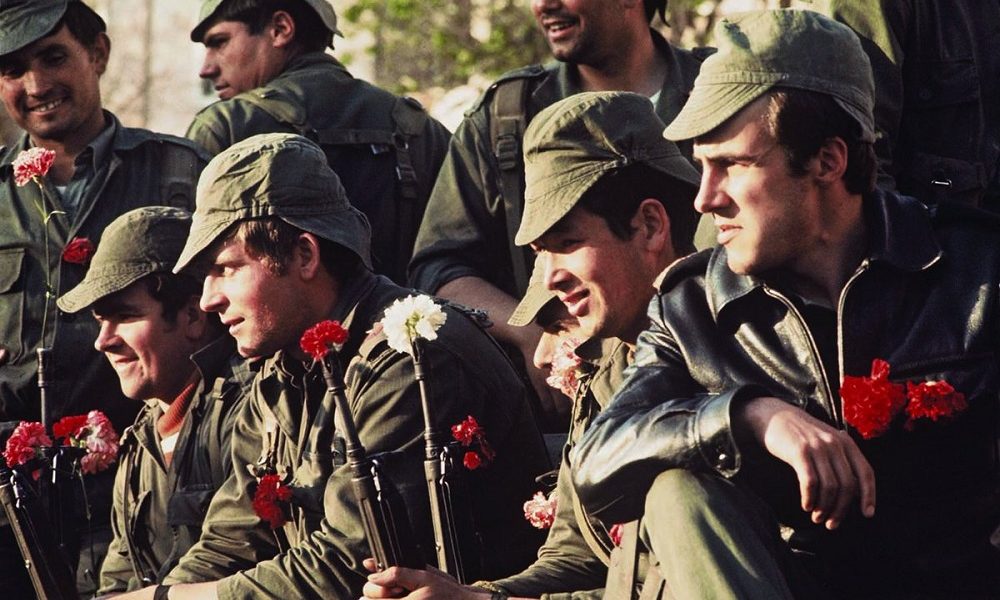
This time, however, it would not have happened to establish a military dictatorship as in Chile the previous year or as it would happen in Argentina two years later.
The aim, on the contrary, would have consisted in re-establishing democracy in Portugal and negotiating peace with the overseas territories still considered colonies, but for almost a decade at war with Portugal for independence.
Africa:
- Angola
- Mozambique
- Guinea-Bissau
- Cape Verde
- Sao Tome and Principe
- East Timor
- Goa, Daman and Diu (already lost in 1961 but still claimed until 1974)
Asia:
- Macau (still under Portuguese administration)
The beginning
How did it come to this? It all began with the coup led by General Carmona in 1926.
The country was, in fact, in a devastating economic crisis. The economist Antonio de Oliveira Salazar was appointed Minister of Finance with full powers in 1928. In just one year, he managed not only to balance the budget, but even to the surplus. A success that opened the doors of the Presidency of the Council of Ministers to him.
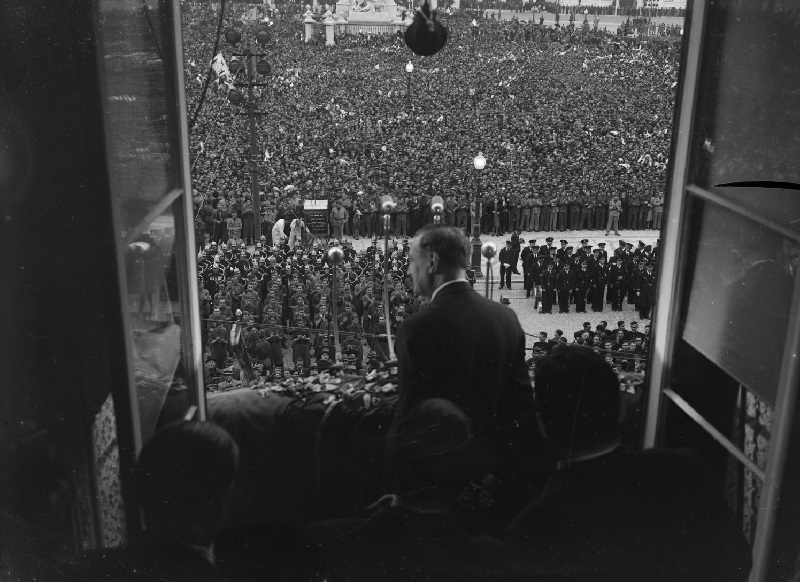
In 1932 Salazar became the dictator who, through his Estado Novo, controlled every aspect of Portuguese society for 35 years on the model of Mussolini’s fascist state. In 1968 a cerebral thrombosis, caused by a domestic accident, removed him forever from power.
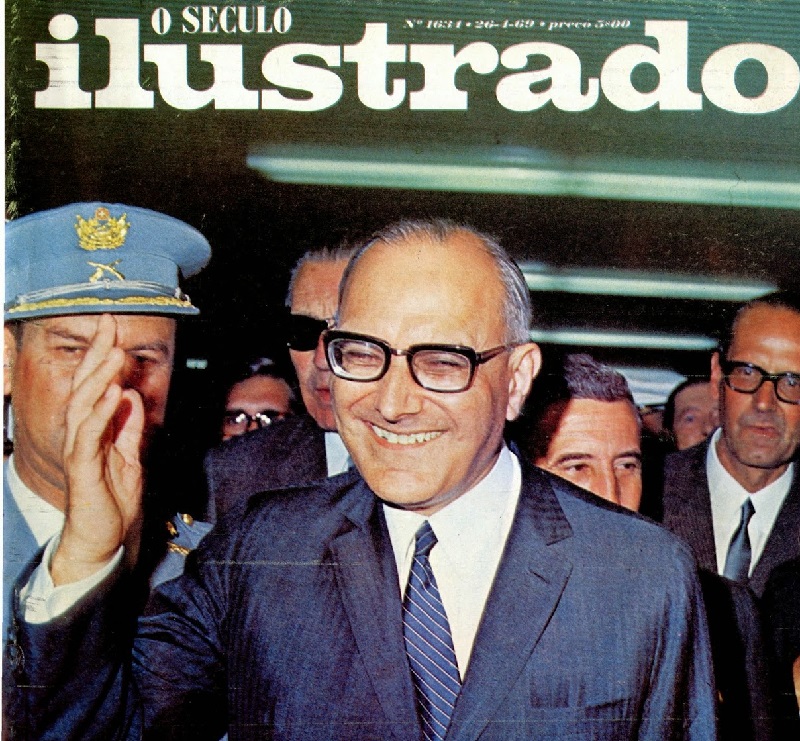
He was almost immediately replaced by Marcelo Caetano, but until the day of his death in 1970 he remained convinced that he was still the Prime Minister. It seems that no one ever had the courage to tell him the truth.
In the meantime of these years of government Salazar had created the PIDE (a political police trained by the SS and later by the CIA), he had suffocated the political opposition with prison or firing squad, he had made Portugal join NATO in an anti-communist function and since the 60s he had unleashed a ruthless repression in the colonies fighting for independence.
In fact, it will be this last factor and the death of Salazar himself that will condemn the regime to death. The wars that arose during the period of decolonization, especially in Africa, were initially kept secret from the Portuguese people, but soon the economic and human costs involved in these wars would make it impossible to continue such a silence.
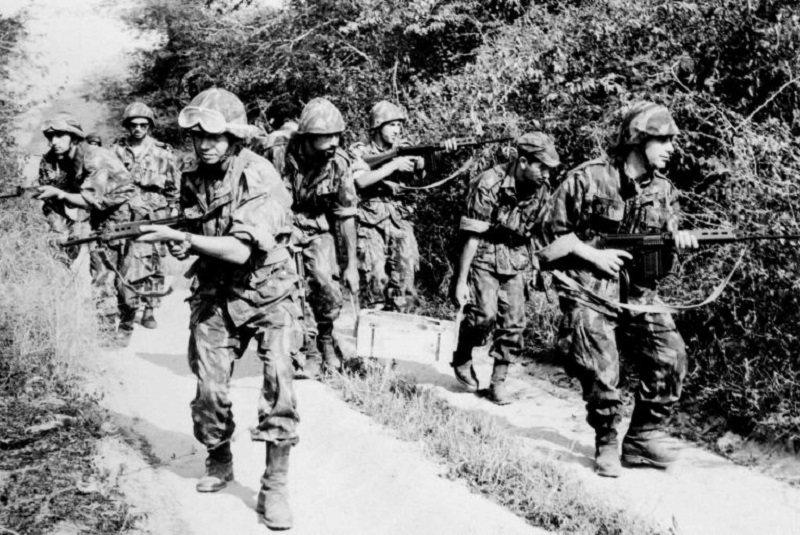
Arriving in 1968, Marcelo Caetano, rector of the Faculty of Law in Lisbon, “inherited” Salazar’s Estado Novo. The professor, realizing the economic and social crisis that is increasingly decimating the regime’s consensus, therefore decided to implement a series of legislative and social improvements.
Such reforms bode well for the people on a possible democratic turn, but in the end they will not produce real change. An example? Parliamentary elections are allowed, but why then for every opposition MP “voted” none of them finally entered parliament?
MFA
In fact, only the ruling party won the elections and remained in parliament with an “absolute majority”. Thus it was that without civil liberties the MC (the movement of captains) was born.
This movement formed by socialists, communists and in the minority liberal-democrats was composed of middle-ranking army officers who were tired of war, dictatorship and of continuing to kill innocent civilians without achieving concrete victories. Such sentiment would later “broaden the movement” by becoming the MFA (armed forces movement).
The army, now demotivated by a war that seemed endless, forced to fight in a conflict unanimously condemned by international public opinion, observing the economic crisis, political isolation and generalized dissatisfaction finally created the MFA.
This movement was composed, moreover, for the most part of soldiers who participated, or had participated, in the War in Africa. Among them was Captain Salgueiro Maia, the one who would become an icon of the rebellion that later became the Revolution.
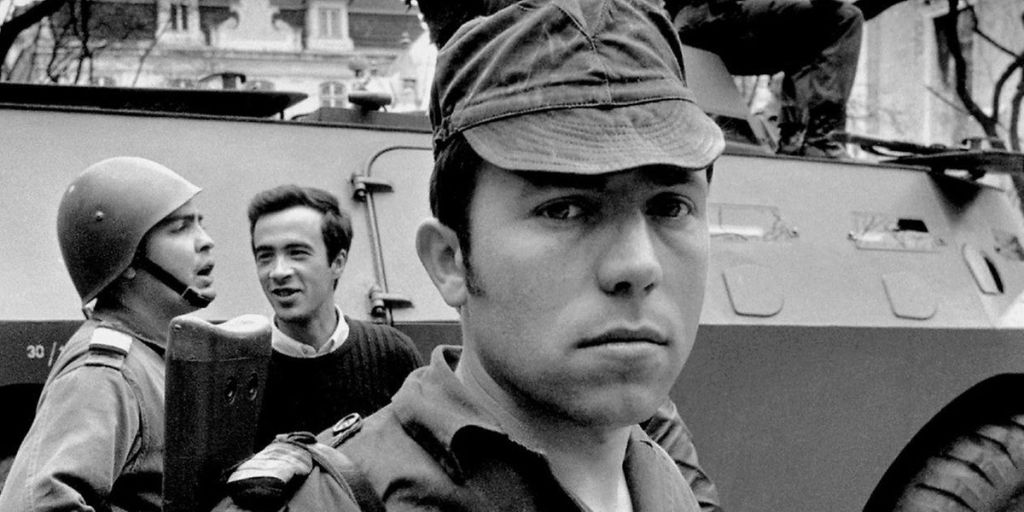
Why has it become a symbol? On the day of the Revolution he will lead the column of armored vehicles that will surround the palaces of Power and force the surrender of Caetano, moreover, he was apolitical. Only one wish he expressed that day: “I want democracy”.
Liberation
On March 24, 1974, the last clandestine meeting of the military took place, and in the face of the preservation of Caetano’s colonialist policy, they decided to overthrow the regime. The coup is set for the night between 24 and 25 April. A beautiful workers’ song is chosen as the signal for the start of the operations.
On the evening of April 24, everything was ready. In the command post secretly installed in the Pontinha district of Lisbon, a large group of soldiers commanded by Captain Saraiva de Carvalho nervously waits for the signal.
About 20 minutes after midnight, the managers of Rádio Renascença, in agreement with the MFA, broadcast the song Grândola vila morena by singer-songwriter and political activist José Afonso. “O povo é que mais ordena“: those who find themselves listening without knowing the background think that someone will at least lose their job that night.
10 minutes after the signal, the machine of the Revolution is already in motion.
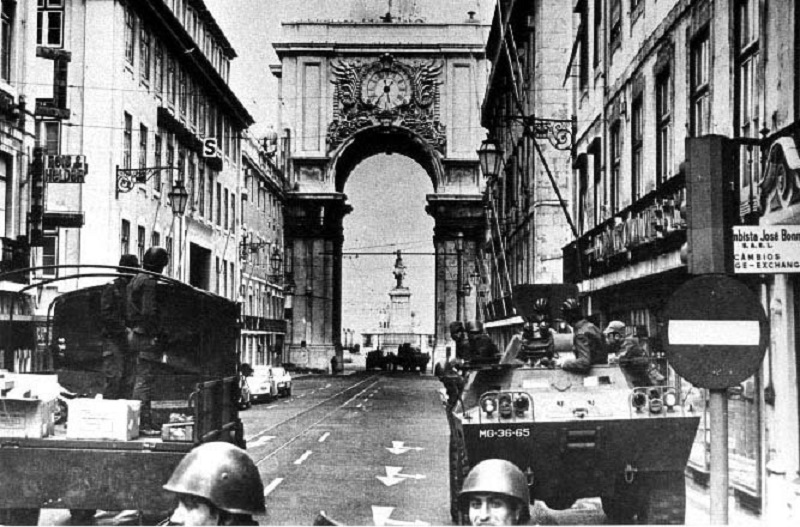
At dawn on April 25, the military occupied practically all the airports, ministerial offices and the media, and arrested most of the officers still loyal to the regime, without encountering much resistance. Captain Maia, stationed in Commerce Square with his tanks, witnesses the arrival of government troops only to see them join him.
Marcelo Caetano in the meantime has taken refuge inside the headquarters of the Guarda Nacional Republicana in Largo do Carmo. In the end, realizing the loss of loyalty among the population and unwilling to unleash a civil war, he surrendered, thus accepting his exile.
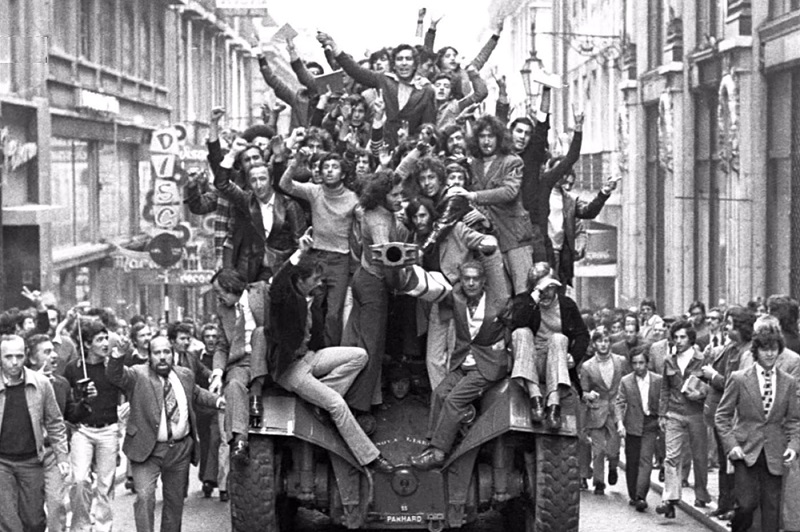
Despite the invitation to civilians to stay at home, citizens of all genders, ages and social backgrounds fill the streets of the capital from the early hours of the morning to join their liberators: the coup turns into a real Revolution.
Women offer the soldiers a drink; students and workers demonstrate against the regime; In the squares you follow the events minute by minute. Around noon, the MFA announced that it had taken total control of the country. At the end of the operation there were just 4 victims, of demonstrators killed by PIDE.
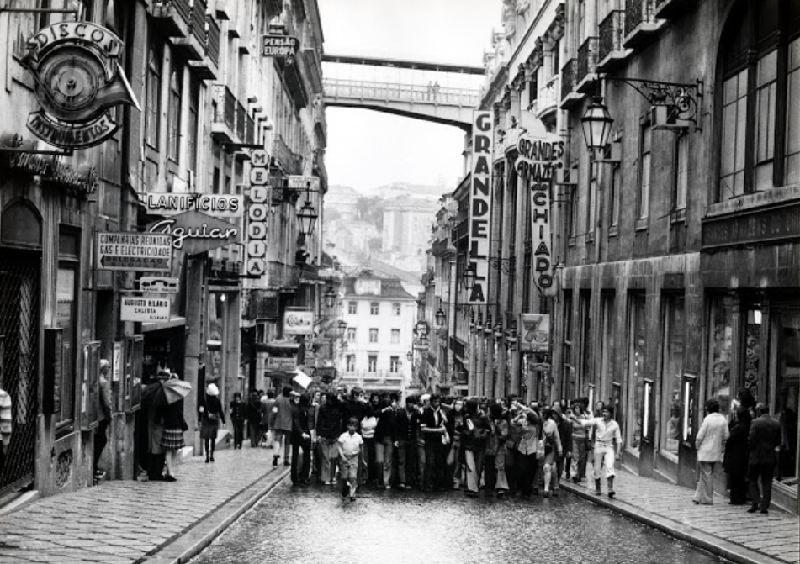
Nine nations won freedom with a single fascist regime overthrown!
Italian solidarity
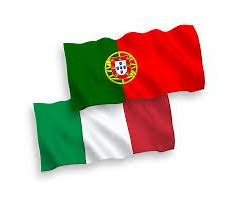
Why does this concern Italy? At the popular level, Italy showed strong support for the Portuguese Revolution. Solidarity demonstrations took place in several Italian cities; in Rome, a large demonstration was held that gathered over 50,000 people.
We should not forget the coincidence of the Carnation Revolution with the Liberation Day in Italy, celebrated on April 25 to commemorate the end of fascism. Many Italians saw in the Portuguese Revolution a parallel with their own experience of liberation, strengthening the bond between the two peoples and their histories of struggle for freedom and democracy.
People’s ideas of the Revolution today
However, doubts still persist about this Revolution or, as here in Italy, there are those who believe that it was a “communist” seizure of power; Well, that’s not the case.
Inside MFA there were communist revolutionary sentiments, including fanatics, but although consistent they were not the majority; socialists (the majority) and liberals (Maia’s faction) were present.
The same communist faction would later be kicked out/ousted from the MFA for attempting a revolutionary communist coup, thus leaving only the reformist socialist faction in power which would later be transferred to civilian authorities.
Today, moreover, Portugal seems to have returned to the political instability of the 20s, today we do not remember the contribution of the MFA and many reformist policies have not been implemented.

Currently, as Portugal prepares for the third legislative elections in three years scheduled for May 18, polls paint an increasingly uncertain and fragmented political landscape: according to the latest ICS/ISCTE survey, the center-right Democratic Alliance (AD-EPP), led by Luís Montenegro, slips to 33% (-5 points compared to March), followed by the socialists (PS-S&D) at 29% (+1) and surprisingly, the nationalist ultra-right of Chega (CH-PfE) jumped to 21% (+4), consolidating itself as the third force.
Portugal is undoubtedly better off today than it was 50 years ago. But low productivity, precarious working conditions and the deterioration of public services put the country behind other European countries. So, do we want to forget what MFA did?
Edited by Tommaso Bernardini
Sources:
25 aprile in Portogallo: storia della Rivoluzione dei Garofani
Il 25 aprile in Portogallo: cosa rappresenta la rivoluzione dei Garofani
Portogallo, 50 anni dal 25 aprile e dalla rivoluzione: cosa resta da fare? | Euronews


 La Ruota Dentata
Lascia un commento